
The year-end inventory count: a practical guide
The annual count is not a punishment. With the right preparation and phone-based scanning, even a catalog of thousands of items closes in one night. When to count, why, and how to do it right.

When should the count happen?
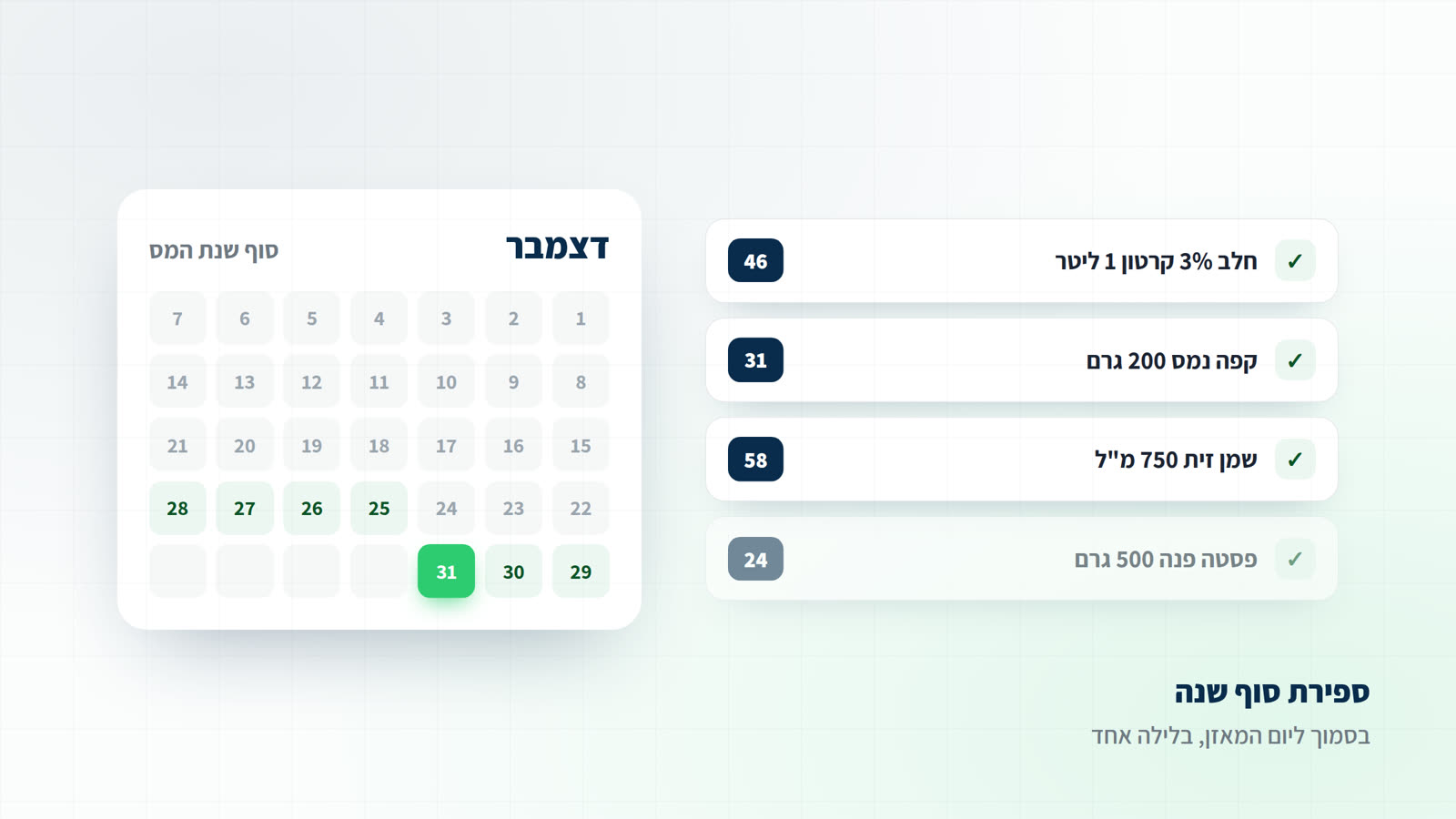
A business holding stock is expected to count it around the end of the fiscal year, as close as possible to the balance date. The common guidance is to count within days of year end, and if you count earlier or later, to document and reconcile the movements in between. The details depend on your business, so set the date with your accountant.
Beyond the requirement, the count has one simple business role: it is the moment the numbers in the system meet what is actually on the shelf.
Why the annual count actually matters
- Stock value goes straight into the financial statements and the profit calculation. Inaccurate stock means inaccurate profit.
- The count surfaces shortages, damage and items that vanished, problems nobody sees day to day.
- It cleans the catalog: duplicates, wrong barcodes and dead items float up exactly here.
- It gives purchasing decisions a real base: what actually ran out, and what has not moved in a year.
Not just once a year: periodic counts
Businesses that only count in December discover a whole year's problems in one evening. Quarterly counts, or short spot counts of one category at a time, keep stock accurate all year and turn the year-end count from a stressful event into routine.
Start with the problem categories: what gets stolen, broken or expires. A fifteen-minute spot count a week saves December's surprises.
Counting methods, and how they differ
- Pen and paper: fits maybe a few dozen items. Beyond that, slow and full of typing mistakes.
- An external counting company: a team that does not know your goods counts once a year, at a high cost, and the knowledge leaves with them.
- Dedicated handheld terminals: accurate, but expensive hardware that needs training, and usually one scanner shared by several workers.
- Scanning from smartphones: every worker scans with the phone already in their pocket, everyone in parallel, and the data lands in one place live. That is the OpticCount approach.
The full comparison: four ways to count inventory, side by side
Preparation checklist: the day before
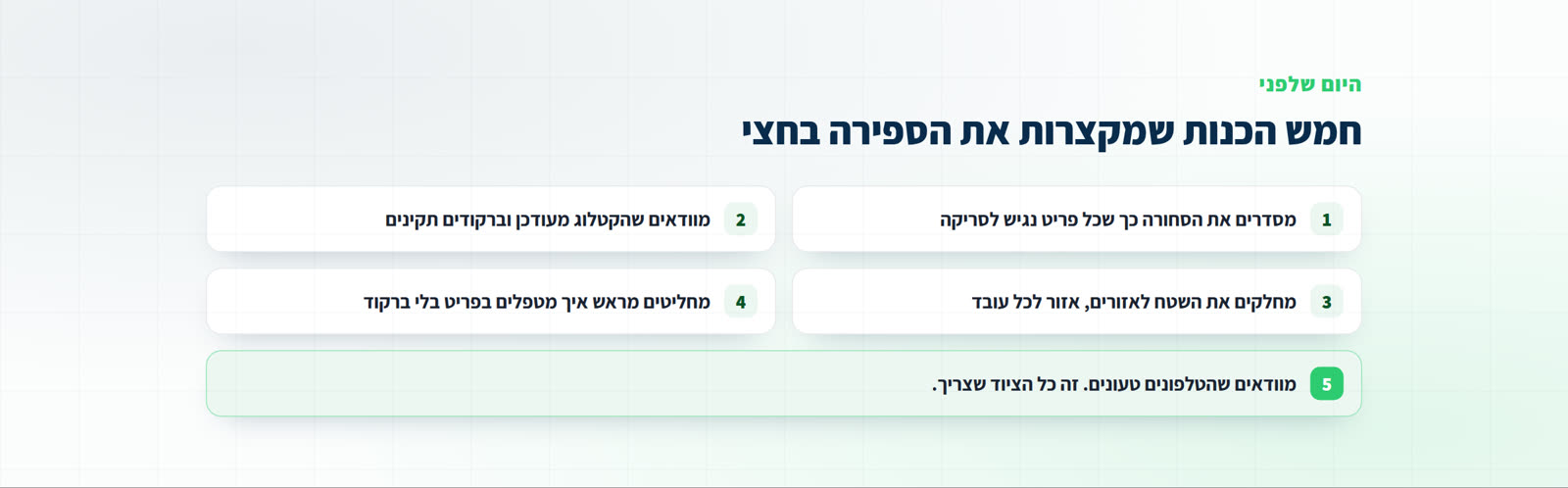
- Arrange the goods so every item is reachable and scannable, no blocking boxes.
- Make sure the catalog is current: new items in, barcodes correct.
- Split the floor into zones and assign one per worker, so no shelf is counted twice and none is forgotten.
- Decide in advance how an item without a barcode is handled: type part of the name, or print a label on the spot.
- Charge the phones. That is all the equipment there is.
Counting on paper? Download the inventory count sheet (Excel and PDF)
And what it looks like with OpticCount
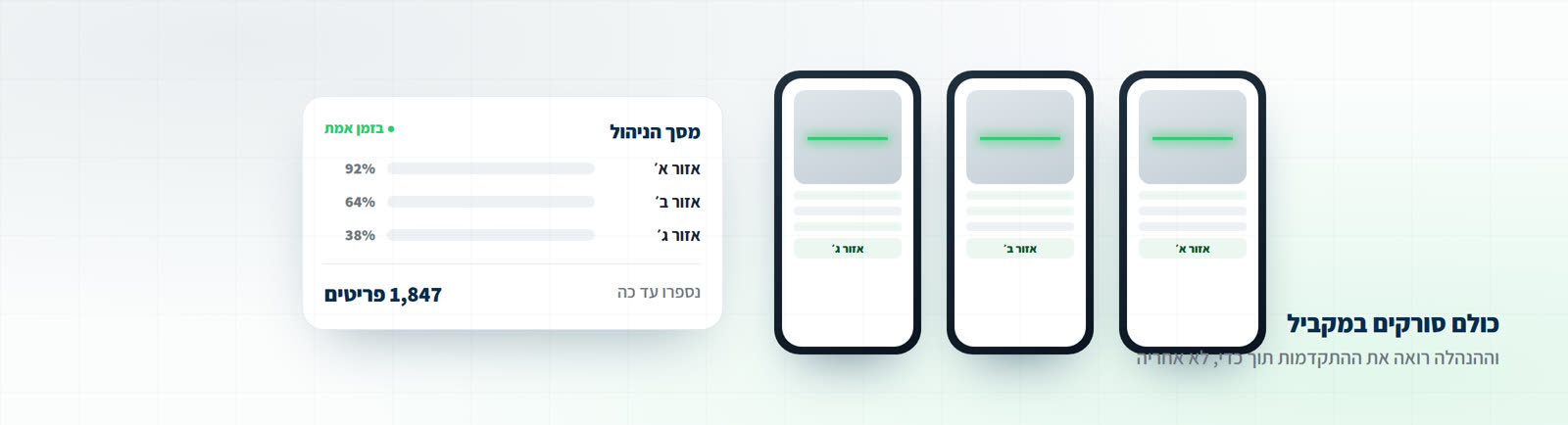
The whole team scans in parallel from phones, progress shows on the management screen live, and differences against the catalog are flagged as you go. When the count ends the report is already done: a clean Excel for the accountant, or a ready template for your ERP.
Common questions
How long does an annual count take with phone scanning?
It depends on catalog size and team, but the order of magnitude changes: our customers close tens of thousands of items in one night with a few scanners. One customer went from 20 counting days to 3 on a 14,000-item compound.
Do we have to close the business during the count?
Not necessarily. Count zone by zone during opening hours, or after them. The count saves and resumes where you stopped.
What about items without a barcode?
Type part of the name and autocomplete finds the item, or print an internal barcode and stick it on. Mixed mode works fine.