
A generic tool can do anything. After you build everything.
Notion, Airtable, forms: genuinely great tools. But an inventory count needs scanning, a catalog, alerts, locations and ERP export, and every one of those you would build and maintain yourselves. Here, it is simply already there.
Build it yourselves, or get it built.
This comparison is not about the generic tool's quality. It is about how much of its work lands on you.
Flexibility for any domain
Generic tool: Their great strength
OpticCount: We do inventory, and that is it
Barcode scanning
Generic tool: A text field and hope
OpticCount: Camera or gun, built in
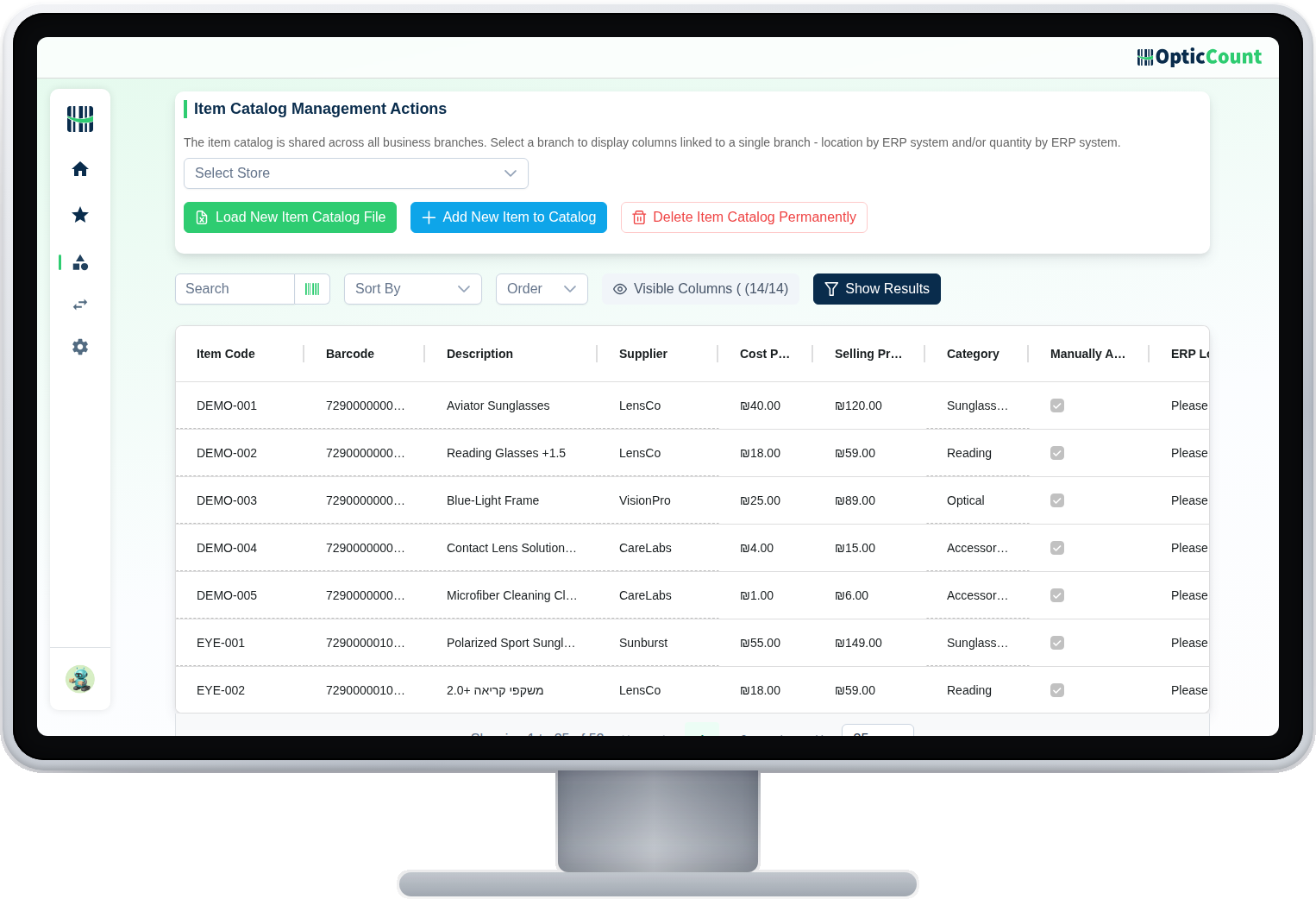
A catalog with variants
Generic tool: Design a schema from scratch
OpticCount: Upload an Excel, map once
Quantities that accumulate
Generic tool: Write an automation
OpticCount: That is just how it works
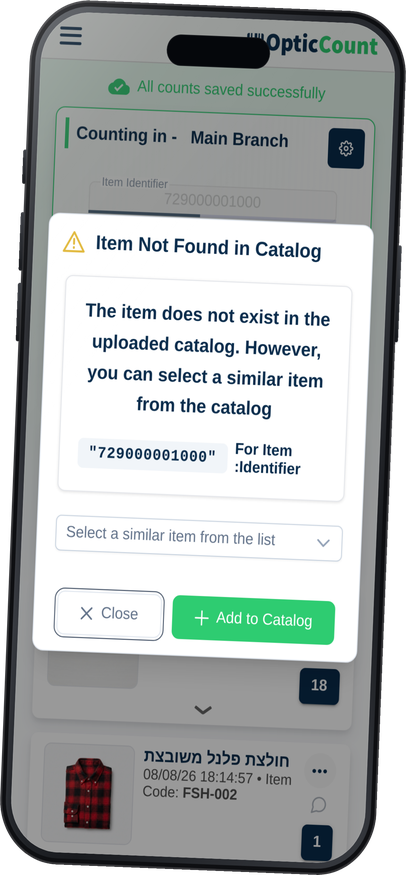
Duplicate and unknown alerts
Generic tool: Another automation to write
OpticCount: Built in, with suggested fixes
Working with no signal
Generic tool: Tool-dependent, usually partial
OpticCount: Saved on device, syncs later
Export to your ERP
Generic tool: None, build converters
OpticCount: Ready templates per system
When a count breaks
Generic tool: Whoever built it fixes it
OpticCount: Support that knows inventory
Three familiar moments, and what happens here instead.
"It worked until we added sizes."
A schema designed for simple items meets color and size variants, and every formula starts to crack.
Variants are a field, not a project.
Size, color and model are built into the catalog, including several barcodes per SKU. There is no schema to fix.
"Only one person knows how it works."
The worker who built the tables and automations moved on, and what remains is a black box.
Nothing to know. It is a product.
The screens are the same screens for everyone, support knows every corner, and no employee takes the system home with them.
"And how does this get into the ERP?"
The moment you discover the generic tool speaks to no ERP, and start building a converter.
Pick a template, download.
Priority, SAP, Hashavshevet, Comax and more. The file downloads in a format your system imports as-is.
What you would build for months, open on day one.
A catalog with photos and variants, a scan screen that understands every barcode, and a smart alert when something does not add up. Not one line of automation was written along the way.
When a generic tool is enough
A small equipment list checked once a year that never touches an ERP? A simple table will do, and honestly, so will paper. The comparison becomes relevant when you need scanning, several workers, or a file that enters a real system.
See it work on your actual inventory
Want to save your team hours and cut mistakes? Leave your details and we'll get back to you today, with answers to your questions.
Nice to meet you
Just so we know who we're calling.