
The best counting device is the one already in their pocket.
Rented handhelds work, and we will not pretend otherwise. But the bill comes back with every count: per device, per day, plus a deposit and damage liability, and a counting team capped by however many units you ordered. OpticCount turns each phone your team already carries into exactly the same tool.
The same count, two ways to get there.
A structural comparison: what actually happens from the moment you decide to count until the report is in hand.
Where the device comes from
Rented handhelds: Ordered, shipped or collected before each count
OpticCount: Already in every employee's pocket
Counters at the same time
Rented handhelds: Exactly as many as you ordered
OpticCount: Uncapped: one more person is one more phone
Cost shape
Rented handhelds: Per device, per day, again every count
OpticCount: A subscription, with no per-device charge
Deposit and damage liability
Rented handhelds: Almost always part of the deal
OpticCount: Not applicable: these are your own devices
Learning curve
Rented handhelds: A dedicated interface seen once a year
OpticCount: An app on the phone, in the team's language
Scan quality
Rented handhelds: A dedicated laser scanner, excellent
OpticCount: A fast camera, or that same scanner over Bluetooth
Working without signal
Rented handhelds: Depends on the model and setup
OpticCount: Saved on the device, uploaded when the network returns
After the count
Rented handhelds: The devices go back, and the trail with them
OpticCount: The history stays with you in the cloud
A count decided on tomorrow morning
Rented handhelds: Depends on availability and delivery
OpticCount: Open a count and start
A team with no smartphones at all
Rented handhelds: The right answer
OpticCount: This needs a device, and it is fair to say so
Three moments anyone who has rented handhelds knows.
"We ordered three, eight people showed up"
Five stand around with nothing. The count stretches by hours, or devices get passed hand to hand.
Every phone is another counter.
Whoever turned up opens the app and joins the count. The team is set by who is there, not by what was ordered.
"How do I enter a quantity here?"
A dedicated interface the team last saw a year ago. Half the first hour goes on reminders instead of counting.
It looks like every other app.
Scan, type a quantity, carry on. A new person joins the count in minutes, with no formal training session.
"The devices went back. Where is the detail?"
You get a file, and everything along the way (who counted, when, which shelf) stayed on hardware you no longer have.
All of it stays with you.
Every scan carries a name, a time and a location, and each count joins your history. The next count starts from what is already known.
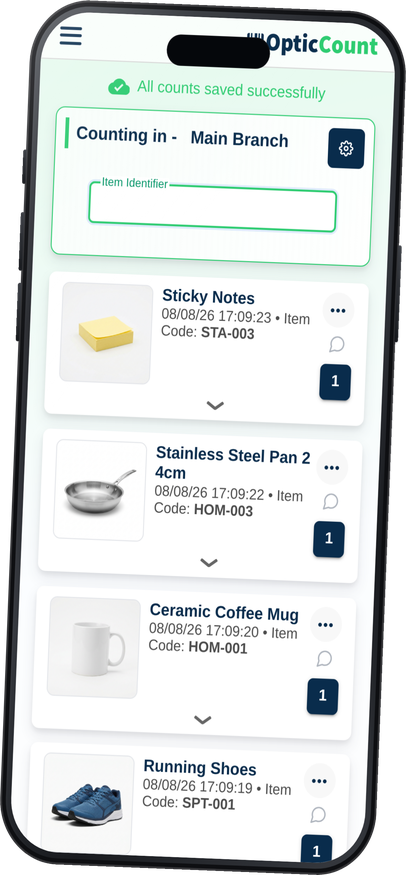
The same work, from the device already in hand.
Scan with the camera or a Bluetooth scanner (an option you buy once, never rent), the item lands with a name and a photo, and the manager watches progress live. Nothing to order ahead, no deposit, and nothing to send back at the end.
When a rented handheld really is the right answer
If the team carries no smartphones at all, if a regulation requires an approved dedicated device, or if tens of thousands of items get scanned back to back in a freezer where everyone wears gloves, an industrial handheld does that job better than we do. Everywhere else, the device already in their pocket does the same work without the rental.
See it work on your actual inventory
Want to save your team hours and cut mistakes? Leave your details and we'll get back to you today, with answers to your questions.
Nice to meet you
Just so we know who we're calling.